What Is Parawinging? Why It’s the Future of Foiling
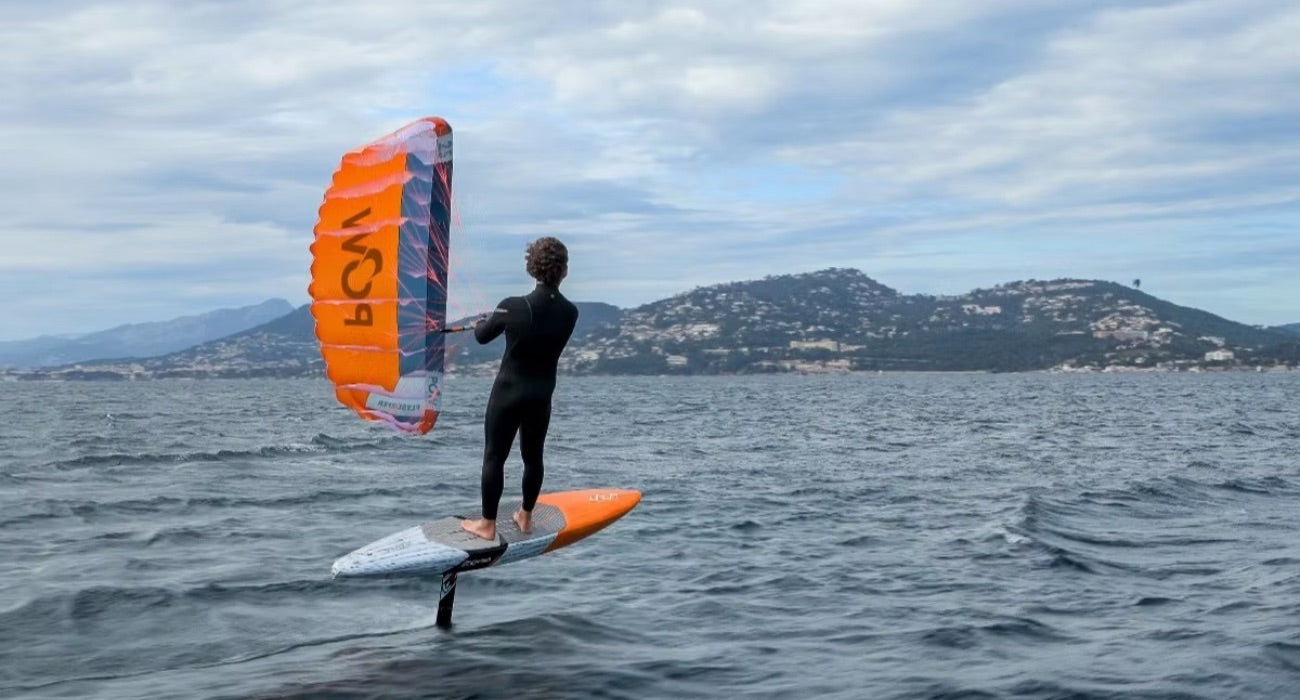
Parawinging is one of the most interesting new directions in wind-powered foiling: a compact, soft canopy “parawing” flown on short lines with a control bar, built to get you up on foil fast—then drift cleanly while you surf bumps, swells, and waves.
If you love downwinders, glide missions, or hands-free wave focus, parawinging makes a lot of sense. It’s minimal, packable, and surprisingly efficient when you need quick drive—without the bulk of an inflatable wing or the footprint of full-length kite lines.
1) What is parawinging?
Parawinging combines ideas from wingfoiling, kitefoiling and downwind foiling. Instead of an inflatable hand wing, you fly a soft canopy wing (paraglider-inspired) on short lines (often ~2–4m) with a control bar. You use it to:
- Generate lift and board speed for takeoff
- Hold efficient upwind/downwind angles without heavy arm fatigue
- Depower + drift quickly so you can focus on surf-style foiling
2) Parawinging vs wingfoiling vs kitefoiling (quick comparison)
| Category | Parawinging | Wingfoiling | Kitefoiling |
|---|---|---|---|
| Setup | Soft wing + short lines + bar | Inflatable wing in hands | Kite + long lines (big window) |
| Pack size | Very compact (no pump) | Medium (pump + wing) | Large footprint (lines + rigging) |
| Drift / wave focus | Excellent (soft canopy, short lines) | Good (but wing stays in hands) | Good power; wave use depends on setup |
| Space needed | Low | Low | Higher (launch/land + long lines) |
| Best for | Downwind glide + surf-style carving | All-round wing sessions | Powered freeride + big range performance |
3) Why parawinging is so good for downwind foiling
Parawinging shines when the goal is efficient takeoff and then clean, low-drag drifting while you connect bumps. Short lines mean less lag and a tighter “feel,” and the soft structure is naturally happy to drift.
- Boost when you need it (start, reconnect, climb back upwind)
- Get out of the way when you’re surfing swell
- Less bulk than an inflatable wing for long missions
4) Is parawinging hard to learn?
If you already foil (wing, kite, surf foil, or downwind SUP foil), parawinging is usually fast to pick up. The short-line setup is more direct and tends to feel less overwhelming than managing a full kite window.
If you’re brand new to wind sports, get your basics right first: safe wind knowledge, leash habits, and confident foil control.
5) What conditions do you need?
Parawinging typically thrives in moderate wind and open-water glide terrain:
- Wind: often best around 10–20 knots (varies by rider + wing size)
- Terrain: open water, swell, downwindable coast runs
- Extras: gusty conditions can be manageable with good depower and technique
6) What gear do I need to start parawinging?
Here’s the clean checklist:
- A foilboard (efficient shapes help a lot for downwind-style riding)
- A parawing (soft canopy wing designed for short-line control)
- A control bar + short lines
- Optional: harness (useful for longer powered runs)
- Recommended safety: leash, impact vest, helmet (as appropriate)
No pump. No rigid frame. Easy to pack.
7) A purpose-built option: Flysurfer POW Parawing (2025)
If you want a dedicated parawing that’s designed for this exact style (rather than adapted), check the Flysurfer POW Parawing (2025).
Why riders like purpose-built parawings:
- Soft canopy feel with clean drift
- Short-line optimised handling and depower
- Compact + travel-friendly (backpack-able)
8) Is parawinging safe?
It can be very manageable—especially because short lines reduce the “big kite” footprint and the wing can depower quickly. That said, you’re still on a foilboard in open water: choose safe locations, ride within your limits, and build skills progressively.
9) Can you jump or do tricks?
Yes—this side of the sport is evolving quickly. Riders are experimenting with transitions, airs off swell, and surf-style manoeuvres that feel more natural when the wing isn’t a big inflatable in your hands.
10) Where is parawinging headed?
Expect rapid progression in:
- Dedicated wings + bar systems
- Foils/boards tuned for glide efficiency
- Downwind challenges and distance riding
- Surf-style freeride and tech progression
Final thoughts
Parawinging feels like a “clean-sheet” approach: minimal gear, fast takeoff, and the freedom to surf swell with less clutter. If downwind glide and wave focus are your thing, it’s absolutely worth paying attention to.
Want to explore a purpose-built parawing?
Shop the Flysurfer POW Parawing (2025)
FAQ
Is parawinging better than wingfoiling?
It depends on your goal. Parawinging is compelling for downwind glide and compact travel; wingfoiling remains the most all-round, mainstream path with a huge ecosystem of wings and learning resources.
What wind range is ideal for parawinging?
Many riders enjoy parawinging most in moderate wind (often around 10–20 knots). Exact wind range depends on your wing size, foil efficiency, board volume, and rider weight.
Do I need a special foilboard?
You can start on many foilboards, but efficient shapes and a glidey foil setup make takeoff and connecting bumps easier—especially for longer downwind-style runs.
Is it safer than kitefoiling?
Short lines can reduce space requirements and simplify handling, but safety still depends on location, conditions, and skill. Always follow local rules and ride within your ability.
What’s the easiest way to start?
Start in steady wind on open water with room, use an efficient foil setup, and practice controlled power-on takeoffs and clean depower/drift. If you’re new to wind sports, lessons are strongly recommended.