Cabrinha Mantis V6 vs Duotone Unit (2026): Which Freeride Wing Is Best for UK Conditions?
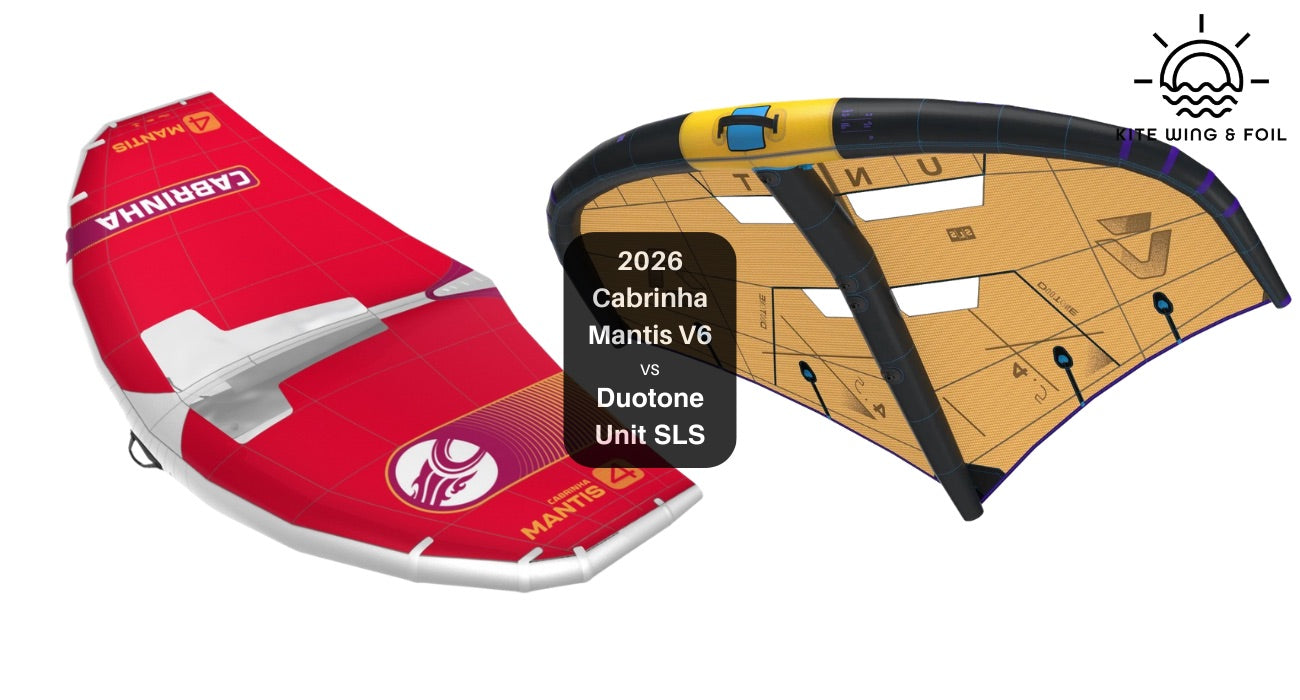
The Cabrinha Mantis V6 2026 and the Duotone Unit 2026 are direct competitors in the all-round freeride wing category. Both are designed for balanced power delivery, broad wind range usability and everyday wingfoiling performance. If you’re choosing one “daily driver” wing for typical UK conditions, this comparison focuses on handling feel, gust stability, low-end power and rider suitability.
- Best all-round pick (most UK riders): Cabrinha Mantis V6
- Closest Duotone alternative: Duotone Unit
- Key deciding factors: feel/ergonomics, gust handling, and your preferred gear ecosystem
If you're browsing the full lineup, start here: Cabrinha 2026 Wings. Want advice on size and setup? Use our contact page.
Note: We sell Cabrinha wings. We don’t sell Duotone, so we link to Duotone’s official product page for reference: Duotone Unit 2026.
What is the difference between the Mantis V6 and the Duotone Unit?
The main difference is feel and tuning philosophy. The Mantis V6 is built to feel predictable and balanced in freeride conditions (especially when wind is gusty), while the Duotone Unit is Duotone’s primary all-round freeride wing designed for broad accessibility and versatility. If you’re choosing one main wing, pick based on stability in gusts and the handling feel you prefer.
At a glance: Mantis V6 vs Duotone Unit

Cabrinha Mantis V6 2026
Balanced freeride wing • predictable power • great in gusty UK sessions

What type of rider is this comparison for?
This is for riders choosing a single primary freeride wing - the wing you’ll use most often in typical UK conditions (gusts, chop, lulls). You care about stability, easy handling, reliable power delivery and a wing that won’t punish you when the wind is messy.
Mantis V6 vs Duotone Unit: quick comparison
- Category: all-round freeride wing
- Skill range: beginner to advanced
- Best use case: everyday UK freeride sessions
- Key deciding factor: gust stability + handling feel
- Low-end power: sizing + foil/board setup matters most
Key decision criteria (UK conditions)
- Gust stability: does the wing feel calm when wind turns on/off?
- Handling + fatigue: are your arms cooked after 60–90 minutes?
- Ease of progression: does it help your gybes/tacks and control?
- Size choice: can you pick a main size that works most sessions?
Performance breakdown in real UK conditions
1) Gust handling
In UK coastal wind where lulls and gusts can change quickly, a wing that delivers smooth power progression helps you stay in control, reduces fatigue and extends your sessions. When comparing freeride wings, “calm in the hands” matters as much as raw power.
2) Pumping and early take-off
Low-end performance is strongly influenced by rider weight, board volume and your foil front wing size. Both the Mantis V6 and Unit are designed to generate efficient lift when sized correctly, so choosing the right size for your setup usually matters more than brand.
3) Progression (gybes, tacks, control)
If you’re progressing, stability and predictable handling help most. Wings that remain balanced during transitions and feel controllable in gusts make it easier to focus on footwork and foil control rather than fighting the wing.
Comparison table
| Category | Cabrinha Mantis V6 | Duotone Unit |
|---|---|---|
| Category intent | All-round freeride “daily driver” | All-round freeride “daily driver” |
| Who it suits | Beginner → Advanced (wide usability) | Beginner → Advanced (freeride focus) |
| Gusty UK sessions | Strong option if you want predictable control | Comparable category—choose based on feel + ergonomics |
| Buying approach | If you want easy reliability + local UK support | If you’re already set on Duotone ecosystem |
| Best next step | Choose a size + shop Mantis V6 | Read specs on Duotone site |
Mobile tip: swipe left/right to view all columns. The left column stays visible.
Which should you choose?
Final decision guidance
- Choose Mantis V6 if you want predictable freeride stability in typical UK conditions and straightforward UK support.
- Choose Duotone Unit if you’re committed to Duotone gear or you’ve demo’d it and strongly prefer its handling/ergonomics.
UK wing size guidance
- Most UK freeride days: many riders live on a 5.0–5.5m as the main size.
- Lighter wind / bigger riders: consider 6.0–7.0m for earlier take-off.
- Windier days: a 3.5–4.5m keeps control and reduces fatigue.
- Board + foil matters: bigger board volume and larger foil front wings usually lets you size down.
Want a recommendation? Send your weight, wind range, board volume and foil front wing size via Contact.