
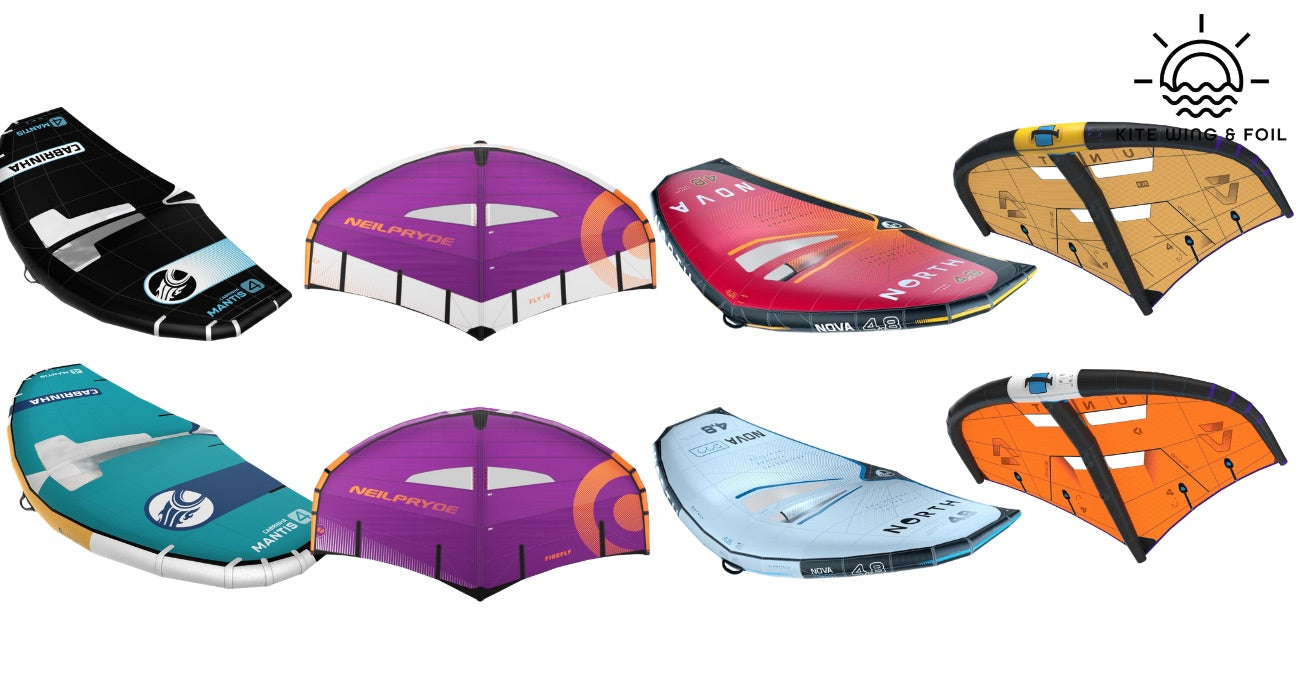
Best Freeride Wing 2026 (UK): Mantis V6 vs FireFly III vs Fly IV (with Duotone Unit + North Nova)
Quick answer (most UK freeride riders): If you want one wing that works in gusts, chop and mixed conditions, start with the Cabrinha Mantis V6 2026 or the NeilPryde FireFly III 2026.
In short:
- Best all-round UK freeride “daily driver”: Cabrinha Mantis V6 2026
- Best value + easy handling: NeilPryde FireFly III 2026
- Performance freeride / faster feel: NeilPryde Fly IV 2026
- Premium freeride upgrade: Cabrinha Mantis Apex 2026
- Mainstream alternatives (reference): Duotone Unit 2026 / North Nova 2025
Start with the ranges: Cabrinha 2026 Wings • NeilPryde 2026 Wings • All Wings. For all brand hubs, see Product Ranges. Want sizing advice? Contact us.
Transparency: We sell Cabrinha and NeilPryde. We don’t sell Duotone or North, so competitor links go to their official pages for reference.
How we picked (UK-focused): We prioritised wings positioned by their brands for freeride / all-round use, then filtered for what matters most in UK sessions: stable handling in gusts, efficient pumping for take-off, and broad everyday usability. Competitor notes are summarised from the brands’ own product pages, while our “best picks” focus on models we stock and support so you can get sizing help and availability quickly.
What “freeride wing” means in the UK
A UK freeride wing is the wing you can use for most sessions: gusty wind, lulls, chop, and messy water. It should feel stable when the wind turns on/off, be easy to pump for take-off, go upwind without drama, and reduce arm fatigue so you can ride longer. That’s why the best freeride wing is usually the most balanced wing - not the most extreme.
UK Freeride Buyer Checklist (use this before you choose)
- Gust stability: does it stay calm when wind switches on/off?
- Pumping efficiency: can you pop up quickly in lulls without overworking?
- Upwind comfort: can you hold angle without fighting the wing?
- Fatigue: do your arms/shoulders survive 60–90 mins?
- Most-used size: can you pick one “main” size that covers your local wind?
Top freeride wings we recommend (and stock)

Cabrinha Mantis V6 2026
Balanced freeride wing for UK conditions: predictable power, confidence-inspiring handling, reliable in gusts.

NeilPryde FireFly III 2026
Best-value freeride choice: smooth power, forgiving feel, ideal for progression and everyday sessions.

NeilPryde Fly IV 2026
Performance freeride: more direct, faster feel with strong efficiency for upwind/downwind angles.

Cabrinha Mantis Apex 2026
Premium freeride upgrade for riders who want sharper response and a higher-end feel.
Main competitor alternatives (reference only)
These competitors are included because many UK buyers cross-shop them before deciding. We don’t sell them, but here’s what the brands position them for, so you can compare fairly.

Duotone Unit 2026 (reference)
- Direct handling: positioned for direct and intuitive on/off power development.
- Balanced freeride: positioned as extremely balanced across courses and wind speeds.
- Drift stability: positioned with improved drift stability and steering on the wave.
- Freeride intent: positioned for comfort/efficiency and learn/progress within the lineup.

North Nova 2025 (reference)
- All-round focus: positioned as balanced, easy-to-use with a wide wind range and intuitive handling.
- Upwind + transitions: commonly positioned for effortless upwind and easy gybes/tacks/transitions.
- Stable trailering: positioned for stable trailering when riding swell.
- System note: designed around North’s boom/handle ecosystem depending on model/version.
Comparison table (UK buying focus)
| Decision | Pick | Why it wins | If not, choose… |
|---|---|---|---|
| One wing for most UK sessions | Mantis V6 | Balanced handling + predictable power in mixed conditions. | FireFly III |
| Best value & easiest freeride handling | FireFly III | Smooth delivery + forgiving control (great progression wing). | Mantis V6 |
| Performance freeride | Fly IV | More direct feel + efficiency for stronger angles and speed. | Mantis Apex |
| Cross-shopping mainstream alternatives | Mantis V6 | If you want in-stock options + UK support and sizing help. | Duotone Unit / North Nova |
Mobile tip: swipe left/right to view all columns.
UK wing size guidance (freeride)
- Most UK freeride sessions: many riders live on a 5.0–5.5m as the “main wing”.
- Lighter wind / bigger riders: consider 6.0–7.0m for earlier take-off and easier cruising.
- Windier days: a 3.5–4.5m keeps control and reduces fatigue.
- Your foil matters: bigger front wings and higher-volume boards usually let you size down.
Want a fast recommendation? Send your weight, typical wind range, board volume and foil front wing size via Contact.
:%20If%20you%20want%20one%20wing%20that%20works%20in%20gusts,%20chop%20and%20mixed%20conditions,%20start%20with%20the%20Cabrinha%20Mantis%20V6%202026%20or%20the%20NeilPryde%20FireFly%20III%202026.%0AIn%20short:%0A...)