Foil Sizing Guide – Mast Length, Front Wing & Stabiliser Explained
Foil setup has a bigger impact on performance than almost any other piece of equipment. The right combination of mast length, front wing size and stabiliser determines how early you lift, how stable you feel, and how fast you can ride.
This guide breaks down foil sizing in real-world terms - including rider weight, ability and conditions - so you can choose a setup that actually works on the water.
You can browse complete systems in our foil kits or build your setup from foil systems, masts and front wings & stabilisers.
How Foil Sizing Works
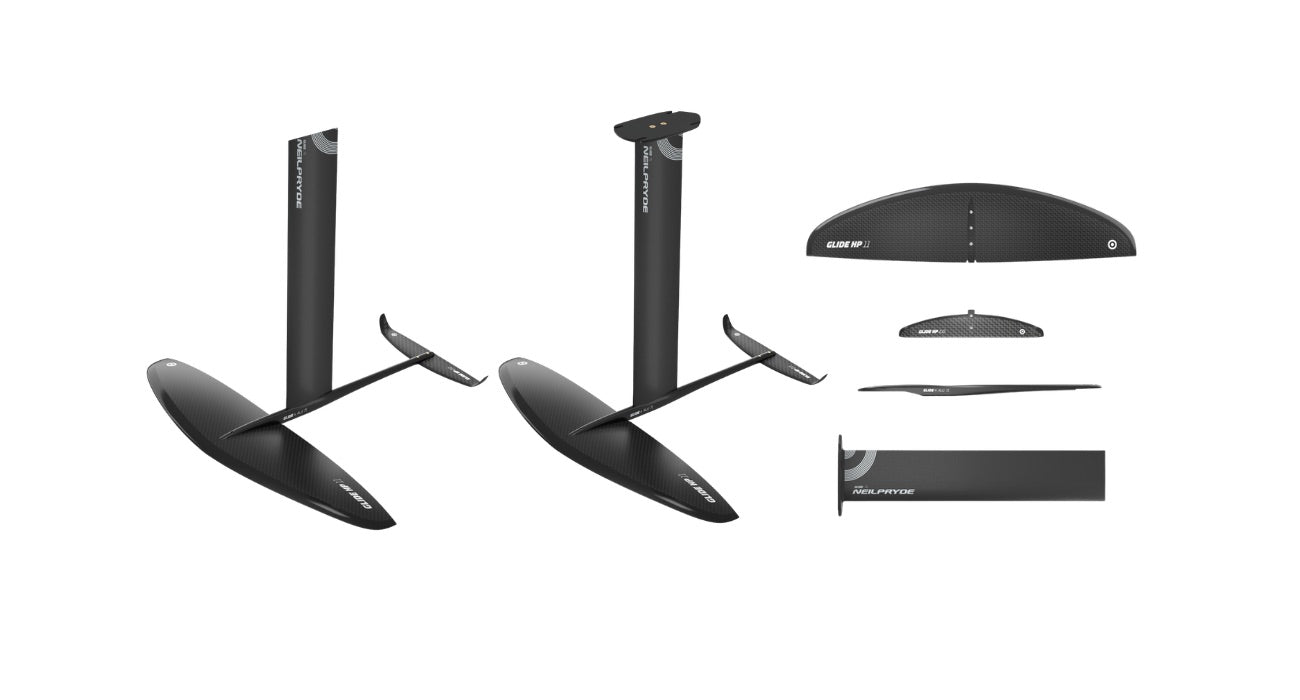
A hydrofoil generates lift as water flows over the front wing. The size, shape and aspect ratio of that wing - combined with mast height and stabiliser - determines lift, speed and control.
- Larger front wings: Earlier lift, more stability, lower top speed
- Smaller front wings: Higher speed, more agility, require more power
- Longer masts: Better control in chop and at speed
- Shorter masts: Easier for beginners and shallow water
Mast Length Guide
| Mast Length | Best For | When to Choose It |
|---|---|---|
| 60–75cm | Beginner / shallow water | Learning to foil, easier height control, reduced risk in shallow spots |
| 75–85cm | All-round riding | Balanced setup for most riders across mixed conditions |
| 85–95cm | Performance / advanced riding | Better control in chop, higher speeds and more aggressive riding |
Explore foil mast options to match your riding style and conditions.
Front Wing Size by Conditions
Front wing size depends on rider weight, ability and - most importantly - wind conditions.
| Rider Type | Light Wind (8–12 knots) | Medium Wind (12–18 knots) | Strong Wind (18+ knots) |
|---|---|---|---|
| Beginner (70–85kg) | 1800–2200 cm² | 1600–2000 cm² | 1400–1800 cm² |
| Intermediate | 1400–1800 cm² | 1200–1600 cm² | 1000–1400 cm² |
| Advanced (85kg+) | 1200–1600 cm² | 900–1300 cm² | 700–1000 cm² |
In lighter wind, larger wings help you get up earlier and stay flying through lulls. As wind increases, smaller wings improve control, speed and manoeuvrability.
Advanced riders will often size down further, especially when using high aspect foils designed for efficiency and glide.
If you're building a setup for lighter wind, explore our foil range and complete foil kits designed for early lift and efficiency.
High Aspect vs Low Aspect Foils
- Low aspect: Stable, easy lift, ideal for beginners and surf-style riding
- High aspect: Faster, more glide, better efficiency, less forgiving
For deeper comparison, see our front wing comparison guide.
Stabiliser Setup
- Larger stabiliser: More stability, easier control
- Smaller stabiliser: Faster, looser, more manoeuvrable
Real-World Foil Setups
Stable All-Round Setup
NeilPryde Glide Surf 75 HP 2026 - ideal for progression, early lift and mixed conditions.
Performance Modular Setup
Cabrinha Union Prestige Foil Kit with carbon mast - tuned for speed and performance.
Browse all foil kits and foil systems.
Common Mistakes
- Choosing too small a wing too early
- Ignoring conditions
- Using too long a mast when learning
Frequently Asked Questions
Quick answers to help you choose the right foil setup.
What size foil should I start with?
Most riders start with 1600–2000 cm² for stability and early lift.
Does aspect ratio matter?
Yes — high aspect = faster, low aspect = easier.
Can I use one foil for wing and kite?
Yes, but you may need to adjust front wing and stabiliser.
Need help choosing? Contact us.