Best Light Wind Setup – Kite vs Wing vs Parawing Explained
Light wind is where equipment choice matters most. When the breeze is marginal, simply choosing the largest kite or wing does not guarantee a good session. The complete setup must accelerate efficiently, maintain speed through lulls and create enough lift without becoming difficult to handle.
This guide compares light-wind kitesurfing, wing foiling and parawinging, explains the role of the board and foil, and helps you choose the most suitable approach for your local conditions, ability and riding goals.
Explore our kitesurfing equipment, wings and wingfoil equipment.
Rider weight, skill, board efficiency, foil size, water state, current and wind quality all change the usable low end. Treat any wind range as guidance rather than a guarantee, and never launch if the wind is too light to relaunch safely or return to shore.
What Counts as Light Wind?
For many recreational riders, light wind means approximately 8–15 knots. The practical range varies between disciplines:
- Below 10 knots: Highly equipment- and technique-dependent. Efficient foils, specialist boards and advanced pumping ability become increasingly important.
- 10–12 knots: Potentially rideable with a properly matched light-wind setup.
- 12–15 knots: A more accessible range for efficient kites, wings, boards and foils.
Wind quality matters as much as the average number. A steady coastal breeze is usually easier to use than a gusty inland reading with deep lulls.
Light-Wind Setup Comparison
| Setup | Main Strength | Best Suited To | Main Consideration |
|---|---|---|---|
| Light-wind kite | Strong power generation and upwind ability | Twin-tip freeride, cruising and riders who want familiar kite handling | Requires a suitable launch area and enough wind for safe control and relaunch |
| Light-wind wingfoil | Low drag and efficient flight once on foil | Foilers with effective pumping technique and a matched board-and-foil package | Getting onto foil is the critical stage; an oversized hand wing alone may not solve it |
| Parawing | Compact power source that can be packed away while foiling | Experienced foil riders prioritising downwind freedom and a surf-like ride | Requires foil skill, suitable terrain and a realistic plan for launch, recovery and return |
What Matters Most in Light Wind?
01
Power Delivery
Usable drive without excessive drag helps the board accelerate and carry speed through lulls.
02
Board Release
Suitable volume, surface area and clean release allow the board to build take-off speed efficiently.
03
Foil Lift & Glide
Early lift must be balanced with enough glide to maintain efficient flight through softer patches of wind.
04
Weight & Technique
Rider weight, balance and pumping technique all influence how much power, board support and foil area are required.
Maximum Pull & Upwind Drive
Light-Wind Kite Setup
A kite normally offers the strongest power source of the three options and can provide excellent upwind performance. For riders who want to stay on a twin tip, a dedicated light-wind kite combined with an efficient board is usually the most straightforward route.
What to Look For
- Steady, accessible low-end pull.
- Predictable steering in marginal wind.
- An efficient board that planes early.
- A size matched to rider weight and local wind.
Best for: Twin-tip freeride, strong upwind ability and familiar kite handling.
View Cabrinha Stylus → Shop Kites →Efficient Flight & Glide
Light-Wind Wingfoil Setup
A wingfoil setup can be exceptionally efficient once flying, but every component must work together. The wing creates the initial drive, the board must accelerate and release, and the foil must lift at a speed the rider can realistically generate.
What to Look For
- Accessible low-end wing power.
- Sufficient board volume and efficient release.
- A foil selected for early lift and useful glide.
- A setup that responds well to pumping.
Best for: Efficient flight, long glide and making use of small swell once on foil.
View Vision V4 → Shop Wingfoil Gear →Pack-Away Downwind Freedom
Light-Wind Parawing Setup
A parawing is not simply a smaller alternative to a hand wing. Its principal advantage is that it can be packed away after take-off, allowing an experienced rider to foil with minimal equipment in their hands.
What to Look For
- An efficient foil with suitable glide.
- A stable board that accelerates easily.
- A parawing matched to rider and conditions.
- Confident line handling and recovery skills.
Best for: Experienced foilers seeking downwind freedom and a compact power source.
View Flysurfer POW → View Cabrinha Quest →Why Board Choice Can Matter More Than Going Bigger
Adding more kite or wing area increases available power, but it can also add drag, physical load and handling difficulty. If the board cannot accelerate cleanly, the extra power may not translate into an earlier start.
- For kitesurfing: A wider, more efficient board can plane earlier and hold speed through lulls.
- For wingfoiling: More volume improves stability, while length and hull shape can improve acceleration and release.
- For parawinging: An efficient waterline can reduce the energy required to build take-off speed.
The correct board should support the rider without becoming unnecessarily large or difficult to control once moving.
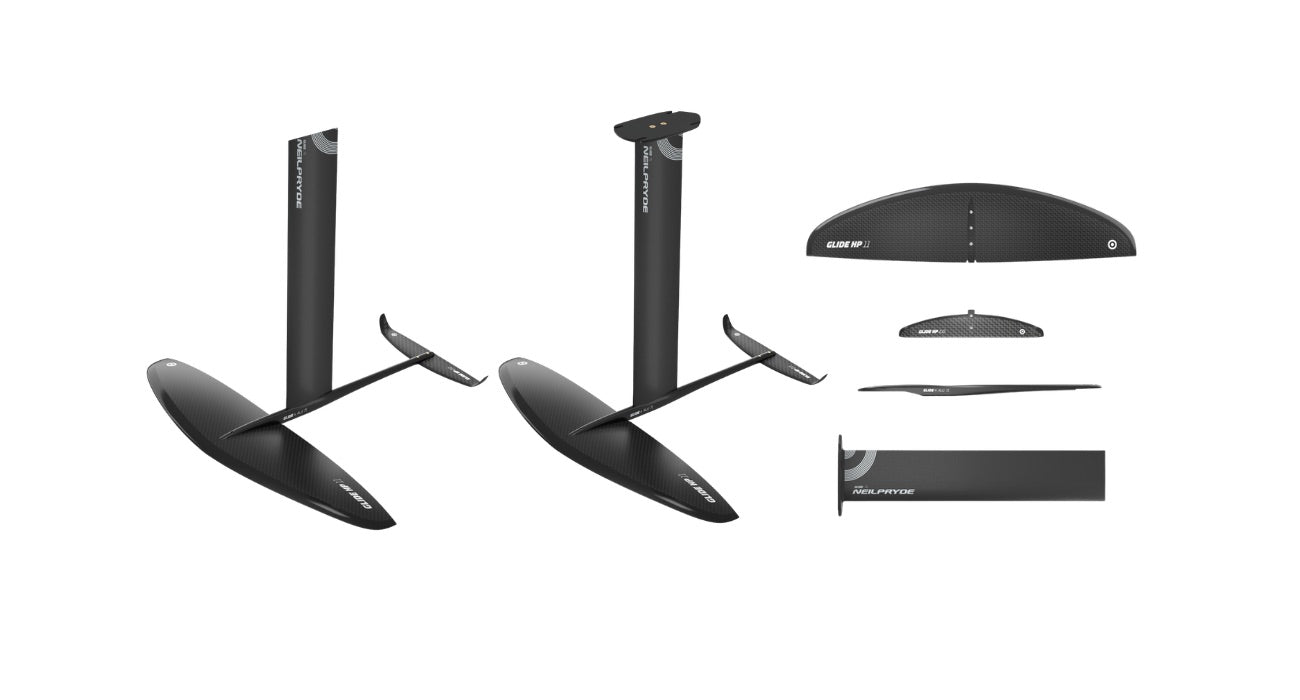
Foil Setup for Light Wind
| Component | What to Prioritise | Why It Matters |
|---|---|---|
| Front wing | Early lift with suitable glide | Reduces the speed required for take-off and helps maintain flight through lulls |
| Stabiliser | Balance and predictable pitch control | Makes pumping and low-speed flight easier to manage |
| Mast | A length suitable for depth, conditions and discipline | There is no single universal light-wind mast length; drag, clearance and local water depth all matter |
| Complete system | Compatible components with balanced lift and control | A well-matched foil is usually more useful than selecting components by area alone |
Which Light-Wind Setup Should You Choose?
| Your Priority | Best Starting Point |
|---|---|
| Maximum pull and twin-tip freeride | Light-wind kite setup |
| Efficient flight and accessible foil progression | Light-wind wingfoil setup |
| Pack-away freedom and downwind foiling | Parawing setup |
| Learning to foil in marginal wind | Stable wingfoil board and forgiving foil before chasing the absolute lowest wind |
Recommended Light-Wind Products
These products address different parts of the light-wind equation. Choose the discipline first, then match the size to your weight, ability and usual conditions.
Light-Wind Kitesurfing
Cabrinha Stylus Kiteboard 2026
A dedicated light-wind twin tip with a wide outline and low rocker for early planing, efficient tracking and easier upwind progress.
View Cabrinha Stylus →Light-Wind Wingfoiling
Light-Wind Wing Options
Compare the low-end-focused Cabrinha Vision V4 with the versatile Mantis V6 and premium NeilPryde FireFly Pro SL.
Vision V4 → Mantis V6 → FireFly Pro SL →Parawinging
Flysurfer POW Parawing
A single-skin parawing created for foiling and freeriding, with compact control and the option to pack the wing away while riding swell.
View Flysurfer POW →Light-Wind & Downwind Boards
Downwind Foil Board Options
Compare the Cabrinha Quest 2026 with the lightweight JP Downwind S-TEC 2025 for efficient acceleration, early foil release and downwind glide.
Cabrinha Quest → JP Downwind S-TEC →Send us your weight, current board and foil, ability level and typical wind range. We will help identify which change is most likely to improve your low end.
Ask for Personal Setup Advice →Common Light-Wind Setup Mistakes
- Looking only at kite or wing size: The board and foil may be the actual limitation.
- Copying another rider’s setup: Weight, skill and local conditions can make the same equipment behave very differently.
- Choosing a board that is too small: Poor stability and slow acceleration make marginal conditions much harder.
- Selecting a foil by area alone: Profile, aspect ratio and system balance also influence lift and glide.
- Ignoring lulls: The lowest wind reading may determine whether you can relaunch or return safely.
- Chasing an unrealistic low end: A claimed minimum wind speed does not guarantee a practical or enjoyable session.
Build Your Light-Wind Setup
The right choice depends on your weight, ability, current equipment and usual location. Explore the relevant range or ask us to check the complete setup before you buy.
Shop Kites → Shop Wings → Shop Wingfoil Gear → Ask for Setup Advice →Frequently Asked Questions
Answers to common questions about choosing light-wind kites, wings, boards and foils.
Can you kitesurf or wing foil in 10 knots?
It may be possible with an efficient setup, suitable rider weight, good technique and steady wind. Ten knots is not a guaranteed minimum because lulls, current, water state and equipment choice can substantially change the result.
Is wing foiling better than kitesurfing in light wind?
Neither is universally better. A kite generally provides stronger pull and excellent upwind ability, while a foil can maintain efficient flight once moving. The better choice depends on your discipline, skill, launch area and equipment.
Does a bigger wing always improve the low end?
No. A larger wing can provide more power, but extra span, drag and handling load can offset the benefit. Board acceleration, foil lift and pumping technique must also be considered.
What foil size is best for light wind?
The correct size depends on rider weight, board, discipline, ability and foil design. A larger front wing often provides earlier lift, but aspect ratio, section profile and stabiliser choice also influence performance.
Do I need a bigger board for light wind?
Often, but volume is only part of the answer. Width, length, hull shape and release affect stability and acceleration. The aim is enough support and efficiency without making the board unnecessarily difficult to control.
What kite size should I use in light wind?
Kite size must be matched to rider weight, board size, kite design, wind strength and skill. Use a manufacturer chart as a starting point and seek individual advice rather than relying on one universal size.
Is a parawing suitable for beginners?
A parawing is generally better suited to riders who already have solid foil control. Managing the lines, generating take-off speed and packing the wing while riding add skills that are easier to learn after basic foiling is established.
What is the most important part of a light-wind setup?
There is no single component. The best results come from matching the power source, board and foil to the rider. A balanced setup that accelerates and maintains speed is more effective than focusing only on maximum kite, wing or foil size.