Wingfoil Setup Guide (UK)
Two stable, beginner-friendly setups for UK conditions — plus the essentials you should add from day one.
Recommended beginner-friendly setups (UK)
Alongside your wing, board and foil setup, a few key accessories improve safety, comfort and reliability on the water. These items are strongly recommended for new wingfoil riders.
Essential Wingfoil Accessories
Most riders start with these accessories alongside their first wingfoil setup.
- Wing leash: Keeps your wing connected so it doesn’t drift away after a fall. Shop wing leashes →
- Board leash: Prevents the board drifting away during early learning sessions. Shop board leashes →
- Helmet: Recommended for crowded launch areas and progression sessions. Shop helmets →
- Impact vest / buoyancy aid: Provides protection and extra flotation. Shop impact vests →
- Pump: A high-volume pump makes inflating wings faster and easier. Shop pumps →
Learn More About Wingfoiling
Once you have your first setup, the next step is choosing the right wing size and understanding how equipment works together for different wind conditions.
If you're completely new to the sport, see our How to Start Wingfoiling guide which explains the equipment needed to begin safely.
Wing size plays a major role in early progression. See our Wing Size Guide to understand how rider weight and wind strength affect wing choice.
Explore more equipment advice in our Wing & Foil Guides.
Need help?
Frequently Asked Questions
A beginner wingfoil setup includes a wing, a wingfoil board, and a foil set consisting of the mast, fuselage and wings. Most riders also use a wing leash and board leash to keep their equipment connected during falls.
Most beginners start with a 5m wing as it offers a good balance of power and control in typical UK wind conditions. Lighter riders may prefer a 4m–5m wing, while heavier riders or lighter wind locations may benefit from a 6m wing.
Beginners should choose a board with enough volume to float comfortably while standing. A common guideline is rider weight plus 20–40 litres. For example, an 80kg rider would often start with a board around 100–120 litres.
Foils with larger front wings generate lift at lower speeds and are easier for beginners to control. Freeride foils designed for stability and early lift are the most beginner-friendly option.
Many riders use a helmet and an impact vest or buoyancy aid when learning. These add protection and confidence while progressing through early sessions.
Learn More About Wingfoiling
Once you have your first wingfoil setup, the next step is choosing the right wing size and understanding how equipment works together in different wind conditions.
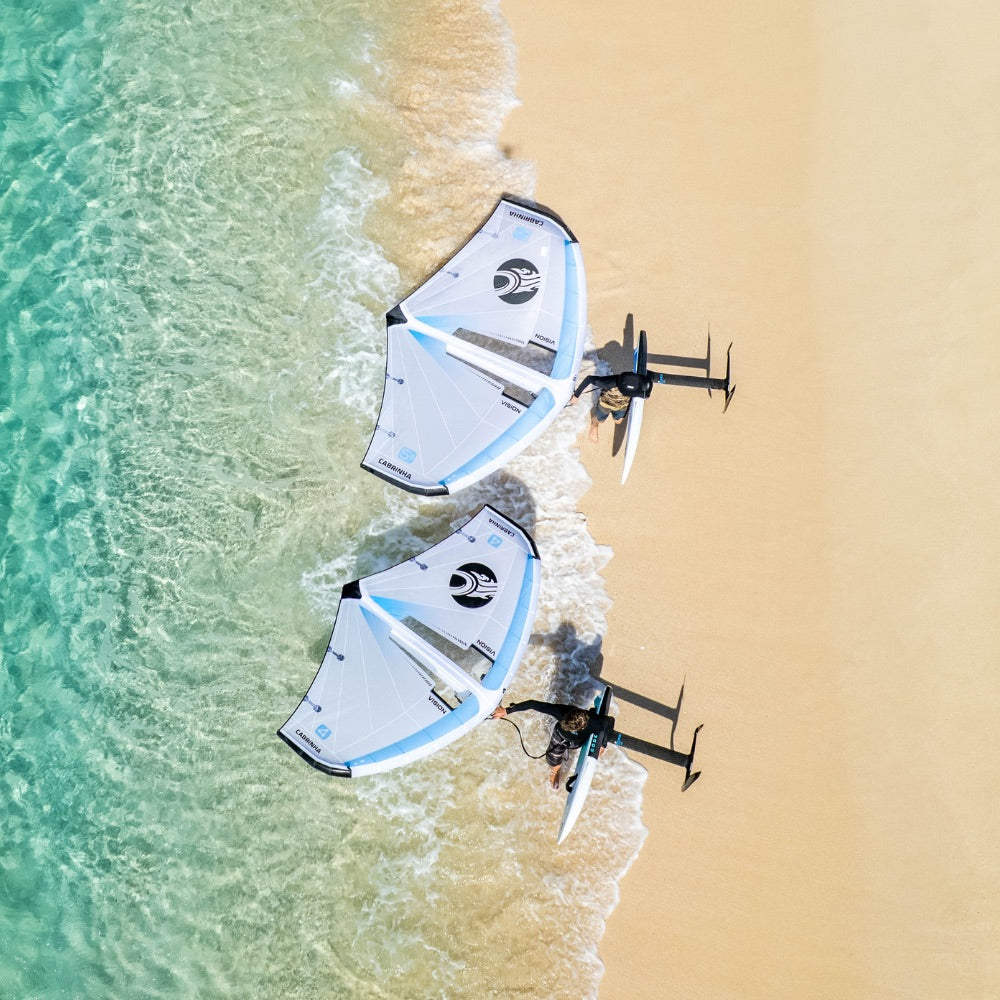
Wing Size Guide
Learn how to choose the right wing size based on rider weight and typical UK wind conditions.
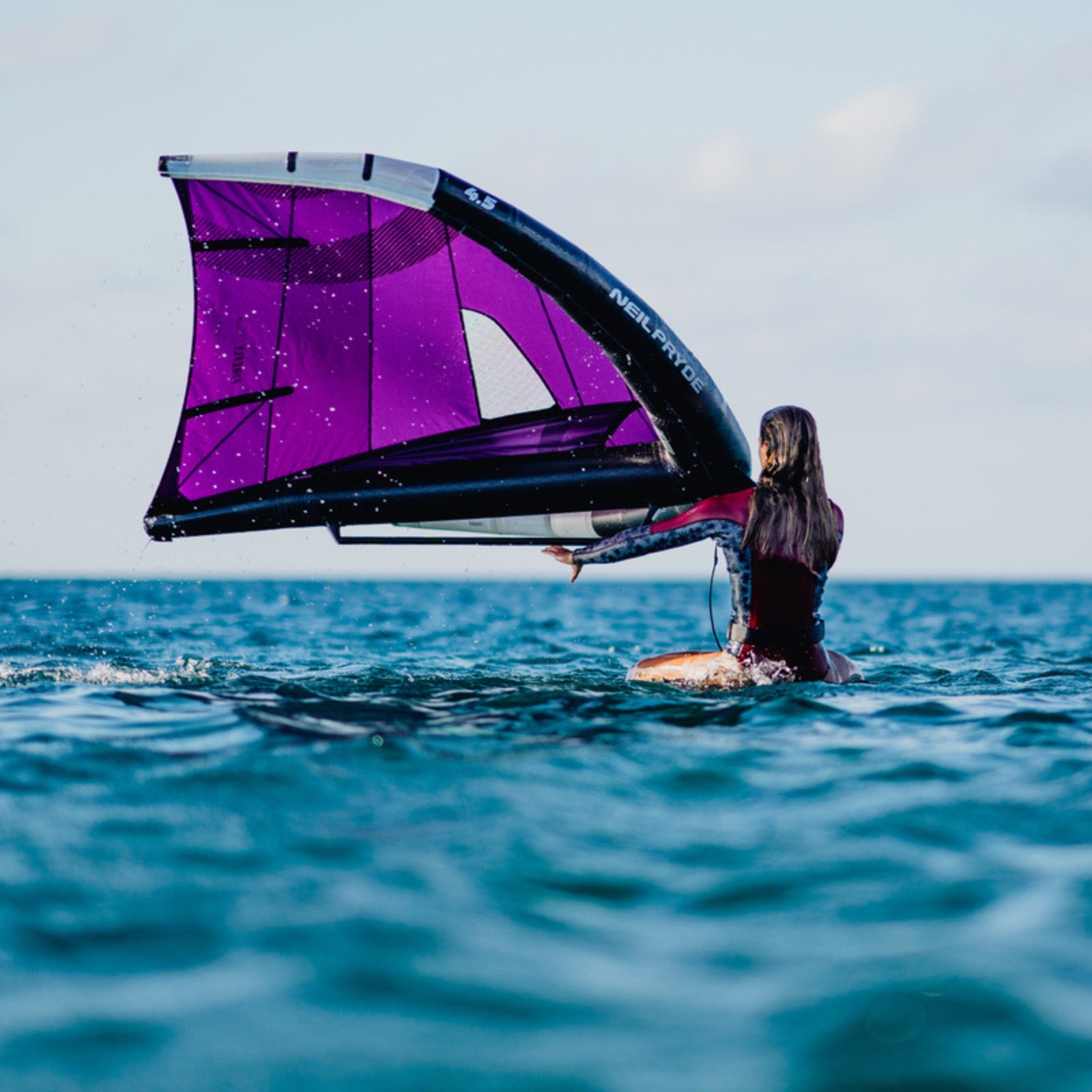
Shop Wingfoil Gear
Explore wings, boards and foils from Cabrinha, NeilPryde and JP Australia.